March 11, 2026
Welding is a critical component of modern construction, shaping the skyline of cities, reinforcing essential infrastructure, and providing the strength and stability needed for safe, long-lasting buildings. While it is often performed behind the scenes, welding plays a central role in nearly every stage of a construction project, from structural framework to final installations. According to the American Welding Society, there were 771,000 welders in the US as of 2025, reflecting how important this skilled trade is to the country’s development and the ongoing demand for large-scale construction work. Without welding, many of the structures we rely on—bridges, high-rise buildings, industrial facilities, and residential complexes—would not have the integrity or durability needed to serve their purpose.
Modern construction depends on precise, reliable joining techniques, and welding remains one of the most efficient and secure ways to fuse metal components. Whether used for steel framing, piping systems, heavy equipment, or architectural features, welding supports the stability, safety, and efficiency required in today’s building practices. Below is an in-depth look at the role welding plays in contemporary construction projects and why skilled welders are indispensable to the industry.
Supporting Structural Framework and Stability
At the heart of most construction projects lies the structural framework—a network of beams, columns, braces, and supports that forms the skeleton of the building. Welding is the primary method used to join these steel components, ensuring they remain securely connected under pressure and environmental stress. Welded joints are incredibly strong, often surpassing the strength of the materials being joined. This provides predictable, reliable performance that construction engineers depend on.
From skyscrapers to stadiums, welded steel frameworks allow for open floor plans, tall structures, and durable architectural designs. The precision of modern welding techniques enables construction teams to create structures that meet exact design specifications while ensuring long-term resilience. Welders play a critical role not just in the initial assembly but also in reinforcing joints, connecting load-bearing components, and maintaining structural integrity over time.
Enhancing Infrastructure Development
Infrastructure—such as bridges, highways, water systems, power plants, and transportation hubs—relies heavily on advanced welding applications. Bridges, for instance, require precise welds to connect steel girders, plates, and trusses that endure constant stress from vehicles, wind, and temperature changes. Welders ensure these connections remain secure for decades.
In water treatment plants, welding is used to install and maintain metal piping systems, tanks, and filtration components. The energy sector also depends on welding to construct pipelines, refineries, electrical towers, and renewable energy systems. Because these projects must withstand environmental exposure and heavy usage, welding provides the durability required for long-term performance.
Improving Safety in Construction Projects
Safety is one of the most important factors in construction. Welded joints are essential for preventing structural failure, as they are known for their consistency and strength. When performed by trained professionals, welding provides a secure connection that reduces the risk of collapse, cracking, or movement within the structure.
Welding also helps maintain safety throughout the lifecycle of the structure. Many constructions receive regular weld inspections to ensure structural components are performing correctly over time. This ongoing commitment to quality control protects workers on the jobsite and building occupants long after the project is complete.
Supporting Mechanical Systems Installation
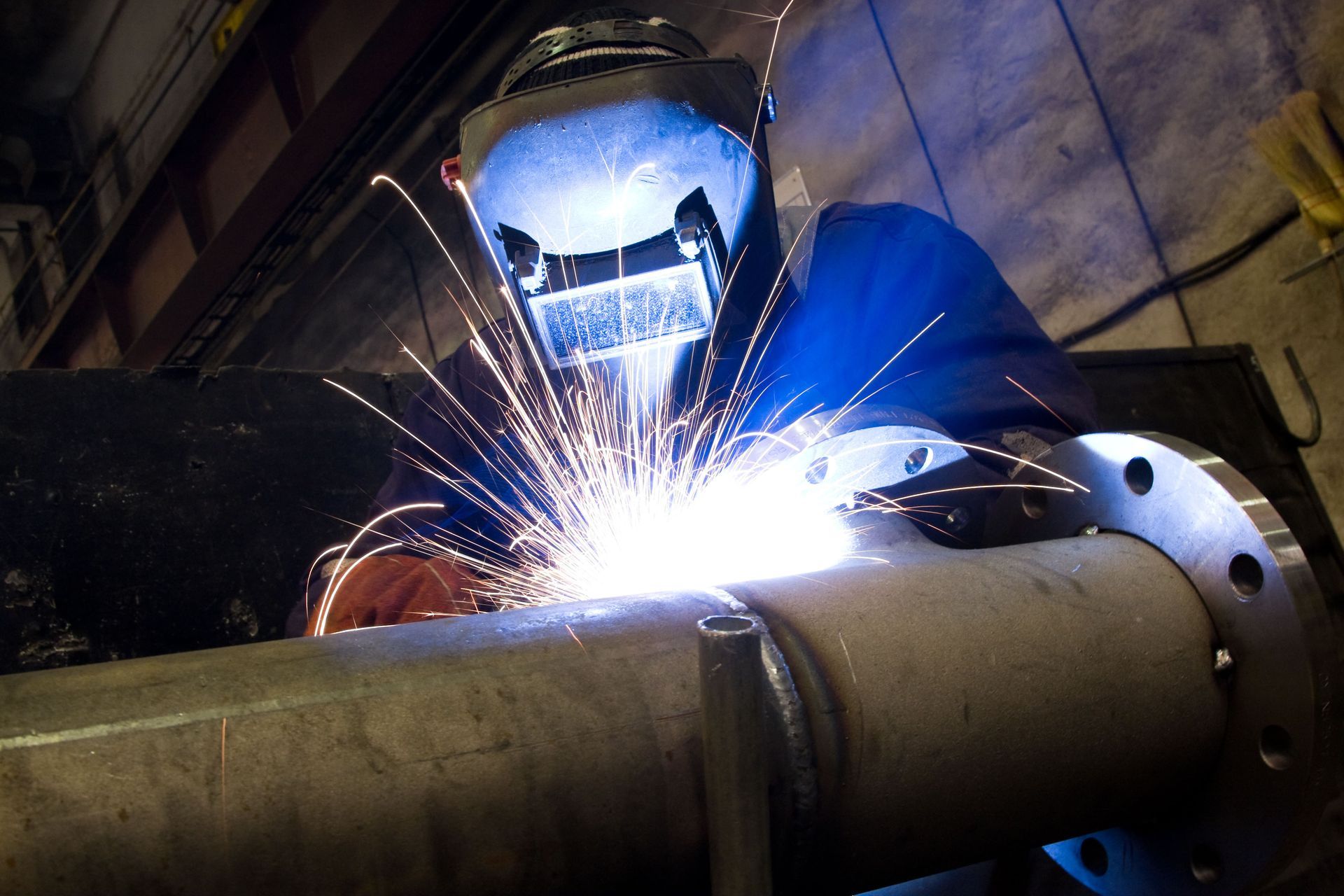
Modern buildings rely on extensive mechanical systems, including heating, ventilation, air conditioning, water supply, and fire protection. Welding is used to assemble and install many of these systems, particularly those involving heavy pipework or metal ducting. Welders fabricate and join metal pipes to create leak-free systems that can withstand pressure, heat, and chemical exposure.
This is especially important in commercial and industrial buildings where large-scale mechanical systems must perform flawlessly. Properly welded pipe joints reduce the risk of leaks, corrosion, and system failure. Welders also participate in fabrication for boilers, heaters, pumps, and other essential equipment that supports efficient building operation.
Advancing Architectural Design and Custom Fabrication
In addition to structural and mechanical applications, welding plays a major role in modern architectural design. Architects increasingly rely on custom metal features to create striking visual elements such as staircases, railings, facades, decorative panels, and artistic installations. Welders help bring these creative visions to life by fabricating bespoke metal components with precision and craftsmanship.
These architectural features must be both beautiful and structurally sound. Welders ensure each piece meets design requirements and safety standards while contributing to the building’s aesthetics. Custom metalwork gives designers the flexibility to incorporate unique geometry, finishes, and textures into the final construction.
Enabling Prefabrication and Modular Construction
Prefabrication and modular construction have become increasingly popular due to their efficiency, cost-effectiveness, and reduced environmental impact. Welding plays a crucial role in manufacturing these modules. Structural components, wall frames, mechanical racks, and even entire building sections are welded off-site in controlled environments.
By completing significant portions of the work in fabrication facilities, construction teams can reduce on-site labor, minimize weather delays, and improve overall quality control. Welders help assemble these prefabricated units so they can be transported and installed quickly and safely. This approach speeds up construction timelines while maintaining the strength and reliability of traditional building methods.
Ensuring Durability in Industrial Construction Projects
Industrial projects—such as factories, warehouses, refineries, and manufacturing plants—require highly durable construction methods. The demanding environments within industrial facilities call for reinforced structures that resist vibration, heat, chemical exposure, and heavy machinery use. Welders are responsible for constructing platforms, supports, equipment housings, and safety barriers designed to handle these conditions.
Industrial welding often involves specialized techniques and materials, such as stainless steel, aluminum, or structural alloys. Welders trained in these methods perform precise work that helps ensure the safety and longevity of industrial operations. Without skilled welding, these facilities would face greater risks of structural failure or costly downtime.
Supporting Innovations in Sustainable Construction
Sustainability is becoming an increasingly significant priority in the construction industry. Welding contributes to eco-friendly construction practices by supporting the use of recycled steel and other metals, which reduces waste and conserves resources. Metal is one of the most recyclable building materials, and welded structures can be easily disassembled and reused.
Welding also plays a role in the construction of renewable energy systems, including wind turbines, solar panel mounts, and hydroelectric facilities. These projects depend on welded components that can withstand environmental exposure while performing reliably for decades. As sustainable building practices continue to evolve, welding remains central to the creation of greener, more efficient systems.
Adapting to Technological Advancements in Construction
Modern welding has evolved significantly thanks to advancements in technology. Automated welding systems, robotics, laser welding, and computer-guided fabrication allow welders to work with greater precision and efficiency. These technologies speed up construction timelines, reduce human error, and improve the quality of every weld.
While automation supports productivity, skilled welders remain essential for overseeing operations, performing complex welds, and ensuring safety. Technology enhances their work rather than replacing it, offering them powerful tools to complete high-quality projects across all sectors of construction.
Providing Jobs and Economic Growth
Welding supports not just construction but also the broader economy. With hundreds of thousands of welders employed across the country, the field offers stable, well-paid work and contributes significantly to national infrastructure efforts. The demand for welders continues to grow as construction expands and older tradespeople retire.
Training programs, apprenticeships, and certification opportunities help new workers enter the field and contribute to the ongoing development of essential construction projects. The strong employment outlook for welding underscores its ongoing importance in building and maintaining modern society.
Welding is the backbone of modern construction, providing the strength, precision, and durability needed for projects of every size and purpose. From structural steel and mechanical systems to architectural features and sustainable infrastructure, welding ensures that buildings are safe, reliable, and built to last. When you need dependable results for your construction project, A & B Welding is here to deliver expert craftsmanship and trusted service. Contact our team today to learn how our welding services can support your next build with quality, safety, and efficiency.